

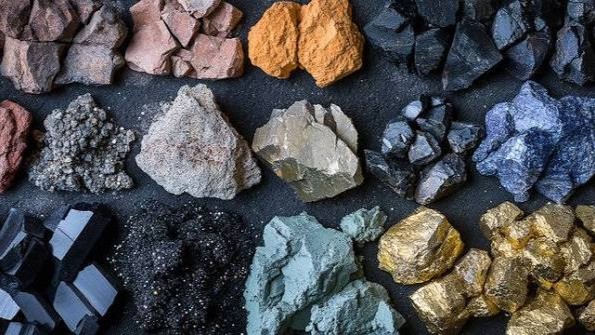
Europe currently imports between 65 and 100% of the critical raw materials needed to power its economy. Many of these often come from a single supplier. At the moment Europe imports 95% of its magnesium and 98% of its magnets from China. These can be found inside a plethora of components from electric motors to wind turbines to precision weapons.
But these figures actually understate the problem. Ultimately mining is not the central issue, it is refining. Although China mined 61% of the world’s rare earths in 2024, it controlled 91% of the processing. The heavy rare earths used in permanent magnets are only refined in the country. Cobalt and lithium can be mined in the Congo and Australia but it all travels to China to be rendered useful.
China understands the sword it’s wielding. In April 2025 it put export controls on a set of medium and heavy rare earths and the magnets made from them, and we’re still feeling the effects. This year, China went further and blocked rare earth exports to a list of European companies, including a major defense manufacturer. A second wave of restrictions is scheduled for November. Beijing declares these materials “dual-use” and cites national security concerns, a similar tone to the one Western governments use in their own rhetoric.
Europe says it has a plan, or at the very least a concept of a plan. The Critical Raw Materials Act sets 2030 targets: 10% of consumption mined at home, 40% processed at home, 25% from recycling and no more than 65% of any strategic material from a single country. The Commission has named dozens of strategic projects and signed supply deals with countries like Chile.
The obstacle in this case, folks, is delivery. European magnets cost 20 to 30% more than Chinese ones. China heavily subsidises its industry and doesn’t carry the same environmental and social costs that come from mining and refining. Building a new mine or refinery can take up to 10 years to permit, finance, build and qualify. Some flagship projects are already stalling, with one French lithium venture entering insolvency despite being crucial to the plan.
Europe really is in a bind here. The window to change is roughly from 2026 to 2029. If the alternatives aren’t built by then, Europe stays exposed to coercion well into the 2030s, not because it lacks the rules, but because rules were never the thing it was missing.